
Where Is Gumboot Lake?
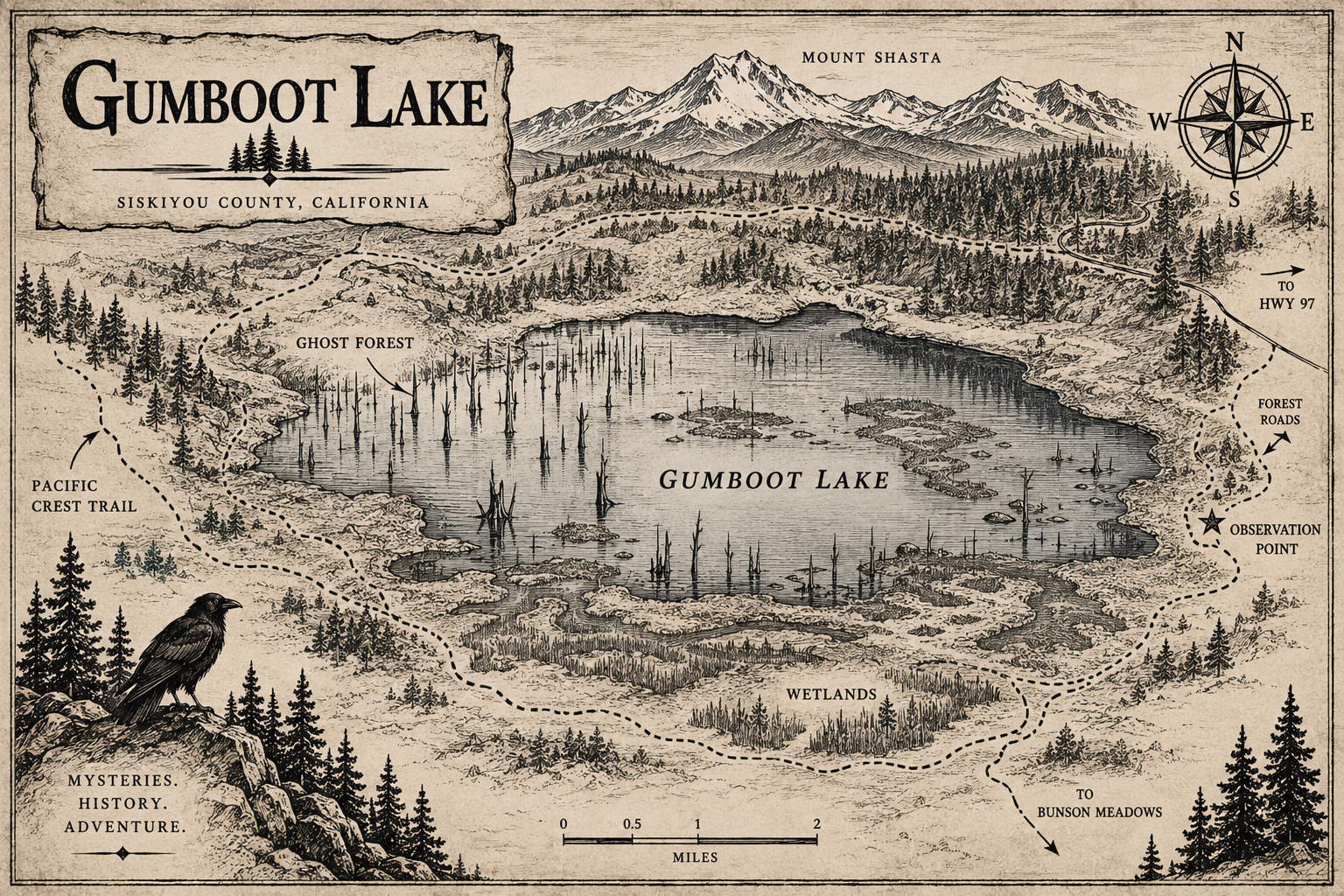
Gumboot Lake is a small mountain lake in Siskiyou County, Northern California, located within the Shasta-Trinity National Forest west of Mount Shasta. Surrounded by dense conifer forest and rugged mountain terrain, the lake feels remarkably secluded despite being within reach of the communities surrounding Mount Shasta.
The lake sits at an elevation of roughly 6,000 feet in the mountains above the Sacramento River canyon. Its high-elevation setting brings cool summers, snowy winters, and a landscape dominated by firs, pines, rocky ridges, and mountain wetlands. The Pacific Crest Trail passes through the broader area, making Gumboot Lake part of a much larger network of historic and modern travel routes through the mountains.
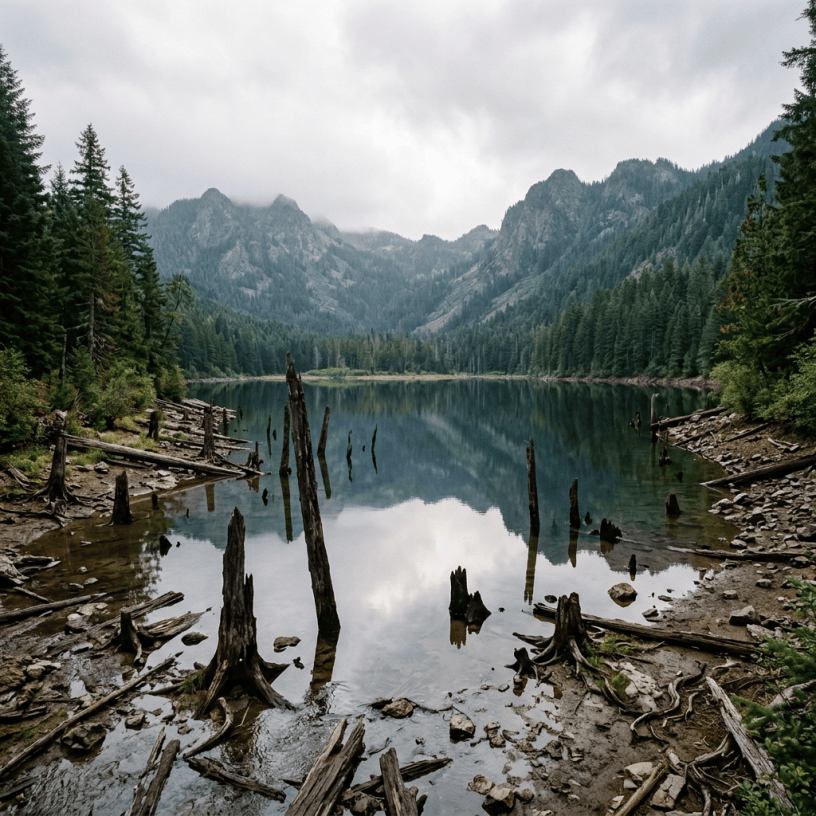
What makes Gumboot Lake especially intriguing, however, is what lies in the water. Dead tree trunks rise from portions of the lake, creating an eerie landscape sometimes described as a ghost forest. When water levels change, even more of this submerged landscape can become visible.
History of Gumboot Lake
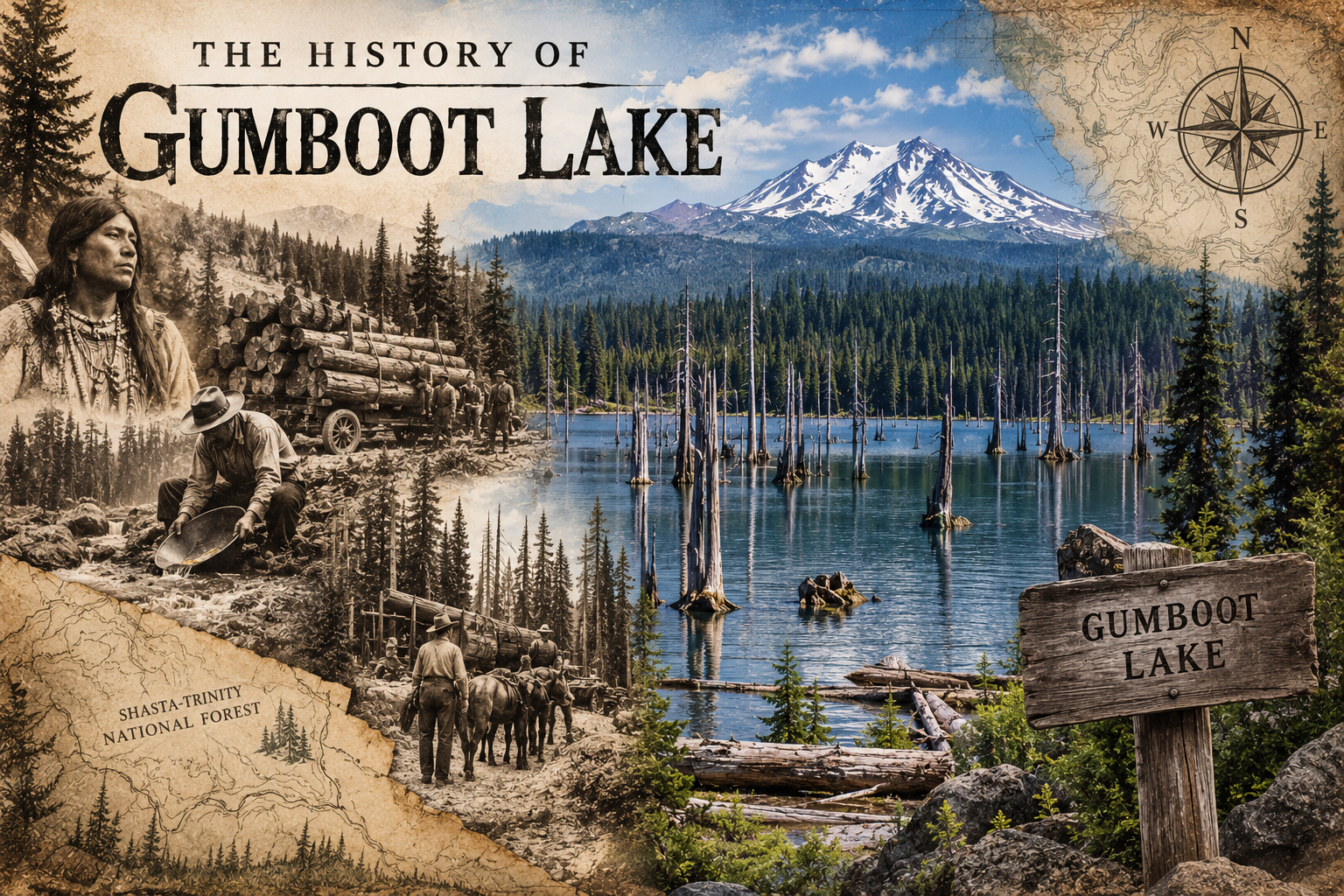
The history surrounding Gumboot Lake is closely tied to the larger story of the Mount Shasta region. Long before roads, logging operations, and recreational trails crossed these mountains, Indigenous peoples lived throughout and traveled across the landscapes of what is now Siskiyou County. The mountains, rivers, forests, and lakes provided food and other resources while also forming part of important cultural landscapes.
During the nineteenth century, the discovery of gold brought rapid change to Northern California. Miners, settlers, and entrepreneurs moved into Siskiyou County, and trails and wagon roads increasingly connected isolated mountain communities. Although Gumboot Lake remained far removed from the region’s major settlements, the surrounding forests eventually became part of a landscape shaped by logging, grazing, transportation, and other resource uses.
By the twentieth century, federal management and the development of forest roads made remote places such as Gumboot Lake more accessible. The surrounding lands eventually became part of the Shasta-Trinity National Forest, while hiking, camping, fishing, and backcountry exploration became increasingly important uses of the area.
Today, Gumboot Lake still retains much of its isolated character. Traces of the region’s human history coexist with a landscape shaped by volcanic activity, fluctuating water levels, forests, fire, and time. It is this combination of natural history and human history that makes the area particularly well suited to exploration and leaves plenty of questions for curious visitors to investigate.
Why Does the Landscape Look This Way?
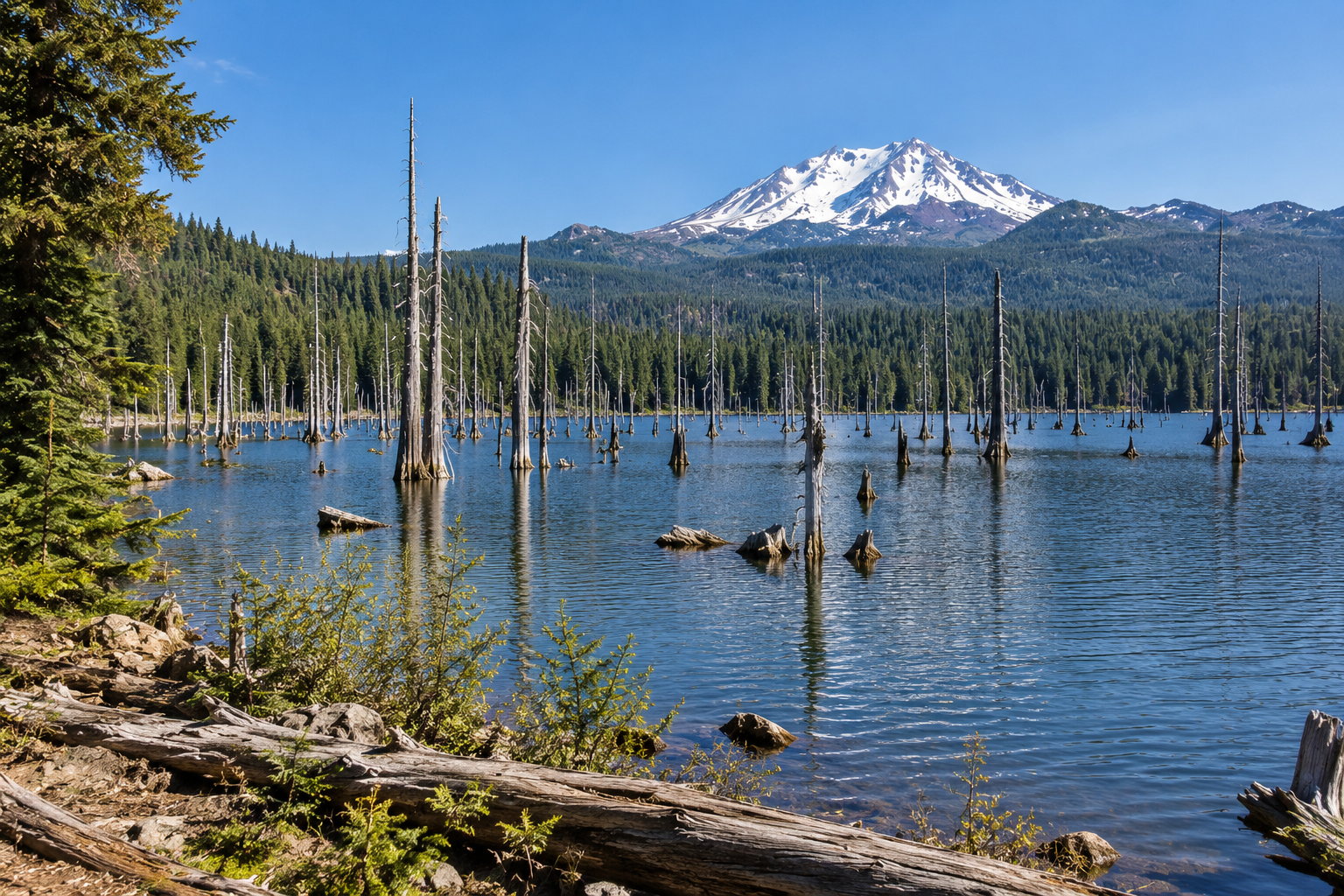
Gumboot Lake’s unusual appearance is the result of the natural processes that have shaped the mountains of Northern California over thousands of years. The lake sits in a high-elevation landscape influenced by volcanic activity, erosion, heavy winter snowfall, seasonal runoff, and changing water levels. Together, these forces have created the forests, wetlands, rocky terrain, and mountain lakes found throughout the region.
One of Gumboot Lake’s most striking features is its ghost forest. Dead tree trunks rise from the water, giving parts of the lake an eerie, almost submerged-forest appearance. These trees are evidence that the shoreline and environmental conditions around the lake have changed over time. Trees that once grew under different conditions died, but their trunks remained standing long after the surrounding landscape changed.
Water levels can also dramatically alter what visitors see. During periods of lower water, portions of the shoreline and submerged features become exposed; when the lake rises, they disappear beneath the surface again. This constantly changing boundary between forest, wetland, and open water helps give Gumboot Lake its distinctive character.
For an explorer, the landscape raises an interesting question: What can the trees, rocks, sediments, and changing shoreline tell us about how Gumboot Lake looked in the past?
Gumboot Lake in Lost Trail Adventures
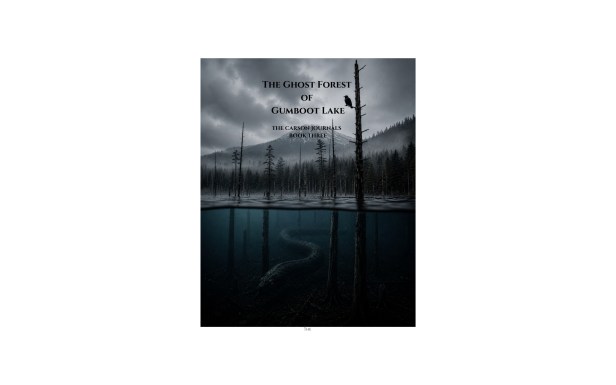
Gumboot Lake provides the real-world setting for Book Three of the Carson Journals, The Ghost Forest of Gumboot Lake. Emma and Luke’s adventure begins when one of Grandpa Eli’s journals leads them to the strange forest of dead trees emerging from the lake and to clues suggesting that Grandpa had been investigating the area long before they arrived.
As the water level changes, the lake reveals pieces of a landscape normally hidden beneath the surface. Photographs, maps, unusual markers, and Grandpa’s notes send Emma and Luke searching for an explanation. Their investigation also draws them deeper into the mystery of the Raven Society, an organization that has been collecting reports of unusual events throughout Northern California for decades.
The story combines fictional mystery with the real landscape of Gumboot Lake, allowing readers to explore the history and environment behind the adventure. The lake’s ghost forest, remote location, and changing shoreline provide the inspiration, but in the Carson Journals, they may also be hiding something Grandpa Eli never intended Emma and Luke to find.

